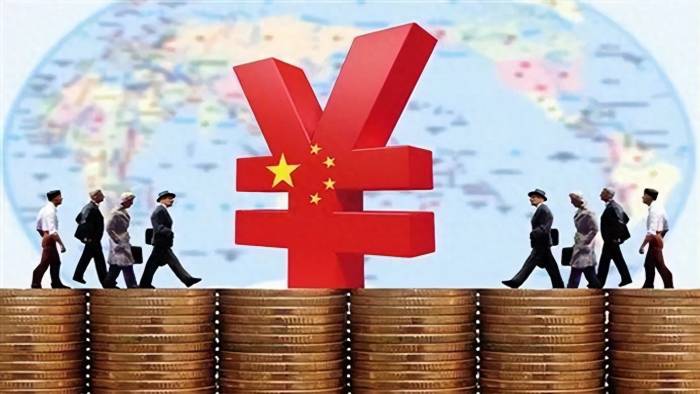
Watching the RMB (or yuan) slide against the US dollar isn't just a financial news headline—it hits your wallet. Whether you're an importer staring at rising costs, a student planning to study abroad, or an investor with assets in China, understanding this move is crucial. The core story isn't about a single day's drop; it's about a confluence of global forces—diverging interest rates, shifting trade winds, and strategic policy choices—that reshape the exchange rate landscape. Let's cut through the noise and look at what's really driving the yuan's weakness, who wins and loses, and most importantly, what you can do about it.
What's Inside This Guide
What is Driving the RMB Depreciation Against the USD?
Forget the idea of one simple cause. The yuan's value is pushed and pulled by four major forces, and right now, most are pointing down.
The Interest Rate Gap: A Powerful Magnet for Dollars
This is the heavyweight champion. When the US Federal Reserve raises interest rates to fight inflation, it makes dollar-denominated assets like US Treasury bonds more attractive. Money flows where the return is higher. Investors sell yuan to buy dollars, increasing demand for USD and pushing its value up relative to the RMB. The People's Bank of China (PBOC), facing different domestic economic pressures, often can't or won't match these hikes stride for stride. This policy divergence creates a fundamental pressure for yuan depreciation. It's not speculation; it's basic capital flow arithmetic.
Trade Dynamics and Economic Sentiment
A country's trade balance is a classic currency driver. Strong export demand brings in foreign currency, supporting the yuan. But when global demand softens or trade tensions flare up, that support weakens. Market sentiment plays a huge role here. If investors grow concerned about China's economic growth prospects or the stability of its property sector, they might pull capital out, selling yuan in the process. This creates a self-fulfilling cycle of weakness. Reports from institutions like the International Monetary Fund (IMF) on global growth forecasts can significantly influence this sentiment.
The Role of the PBOC: Manager, Not Dictator
Here's a crucial point many miss: the PBOC doesn't set a single "price" for the yuan. It manages a band around a daily reference rate. Sometimes, it allows more flexibility, which the market can interpret as tolerance for a weaker currency, especially if it helps exports. Other times, it intervenes by selling its vast USD reserves to prop up the yuan. The key is to watch the daily fixing and the onshore (CNY) versus offshore (CNH) rates. A widening gap between CNH and CNY often signals stronger market-driven depreciation pressure.
How Does RMB Depreciation Affect You? A Real-World Breakdown
The impact isn't uniform. It creates clear winners, losers, and a lot of people in between who need to adjust their plans.
| If You Are... | Short-Term Impact | Long-Term Consideration |
|---|---|---|
| An Importer (Goods priced in USD) | Your costs rise directly. Every dollar you owe for components, commodities, or finished goods costs more yuan. | You must re-evaluate supplier contracts, consider hedging, or risk squeezing your profit margins. |
| An Exporter (Selling goods abroad for USD) | Your products become cheaper and more competitive internationally. Your USD earnings convert to more yuan. | A temporary boost can turn into pressure if competitors devalue or if global demand falls, overshadowing the price advantage. |
| A Student or Family Paying Overseas Tuition (in USD) | The biggest direct hit. Your annual tuition and living cost bill in yuan terms jumps significantly. | Requires reassessing budgets, potentially looking for scholarships, or adjusting living expenses abroad. |
| An Investor with Chinese Assets (Stocks, Property) | The value of your RMB assets falls when converted back to USD. This can double-punish if the local market is also down. | Forces a look at currency-hedged investment vehicles or a more global asset allocation to diversify this risk. |
| A Chinese Traveler Going Abroad | Your spending power shrinks. Hotels, meals, and shopping in the US or other dollar-linked destinations get more expensive. | Might lead to choosing destinations with weaker currencies or simply tightening the travel budget. |
Let's get personal. I remember advising a client—a small electronics manufacturer in Shenzhen—a few years back during a similar phase. He imported microchips in USD and sold finished products locally. The creeping yuan depreciation was silently eroding his margins by nearly 8%. He thought it was just rising material costs. We didn't do anything fancy; we just worked with his bank to set up a simple forward contract for his next six months of chip orders. It locked in a worse rate than the spot at the time, which felt painful, but it provided certainty. When the yuan weakened another 5% over those months, that "painful" hedge saved his quarterly profit. The lesson wasn't about beating the market, but about managing a known business risk.
Practical Strategies to Manage Currency Risk
You're not powerless against currency swings. The goal isn't to predict the direction perfectly—that's a fool's errand—but to protect yourself from adverse moves.
For Businesses: Beyond Praying for a Reversal
Natural Hedging: This is the first and best line of defense. If you have USD costs, try to develop some USD revenue. Even a small client base abroad can offset some exposure. For exporters with USD income, explore sourcing some materials locally in RMB to create a natural balance.
Financial Hedging Tools: These are essential for larger, predictable exposures.
- Forward Contracts: You agree with a bank to exchange a set amount of USD for RMB at a fixed rate on a future date. You eliminate downside risk but also give up potential upside if the yuan strengthens.
- Options: You pay a premium for the right (but not the obligation) to exchange currency at a set rate. It's like insurance—more flexible but has an upfront cost.
Many small and medium-sized enterprises shy away from these, seeing them as complex. Start small. Hedge a portion of your next major invoice or purchase order, not your entire forecast. Treat it as a cost of doing business, not a speculative tool.
For Individuals: Smart Moves for Your Money
If you have upcoming USD expenses (tuition, mortgage):
Don't try to time the bottom. Consider dollar-cost averaging. Convert a fixed amount of RMB to USD each month, regardless of the rate. This smooths out the average rate you pay over time and removes the stress of guessing.
If you are an investor:
Look for funds or ETFs that are currency-hedged. For example, a US equity fund for Chinese investors that hedges the USD/RMB exposure. This isolates the stock performance from the currency move. Also, this is a good time to review your asset allocation. Overconcentration in any single currency region amplifies risk.
Common Mistakes to Avoid When the Yuan Weakens
Panic leads to poor decisions. Here’s what I see people get wrong.
Mistake 1: Panic Buying of USD. Seeing the yuan drop, individuals rush to convert life savings into dollars. This often happens near a local low for the RMB. You convert at a bad rate, pay bank fees, and then the yuan stabilizes or recovers. You've locked in a loss and have USD sitting idle, not earning much in a low-interest environment abroad.
Mistake 2: Ignoring the Fundamentals for Technical Charts. Amateur traders get sucked into short-term forex trading based on charts. Currency markets are driven by macroeconomics and central bank policy, not just patterns on a screen. Betting against the PBOC with your savings is a dangerous game.
Mistake 3: For Businesses, Doing Nothing. Hoping it will "go back to normal" is a strategy, but a terrible one. It's a conscious decision to accept volatility. For a business with thin margins, that can be fatal. Even a basic discussion with your accountant or banker about your exposure is a step forward.
Mistake 4: Overestimating the Export Boost. Chinese exporters shouldn't just count their yuan gains and celebrate. A weaker yuan makes imports from China cheaper, but if global demand is in recession, your customers might not buy more no matter how cheap your product is. The currency advantage can be swamped by a demand collapse.