How to Propagate Pothos: 3 Easy Methods That Actually Work
My Go-To Propagation Guide
Ever snipped a leggy pothos vine and watched it rot in water? I have. More than once. The first time I tried, I used tap water straight from the tap and a cutting with just one node. Let’s just say it didn’t end well. But after years of trial and error (and a few lucky successes), I’ve nailed down three reliable methods that work even if you’re a total beginner. Here’s exactly how to propagate pothos so you get roots, not mush.
Method 1: Water Propagation – The Foolproof Beginner Route
Water propagation is what most people try first, and for good reason: you can see the roots growing, which is satisfying and reassuring. But there’s a trick to getting it right.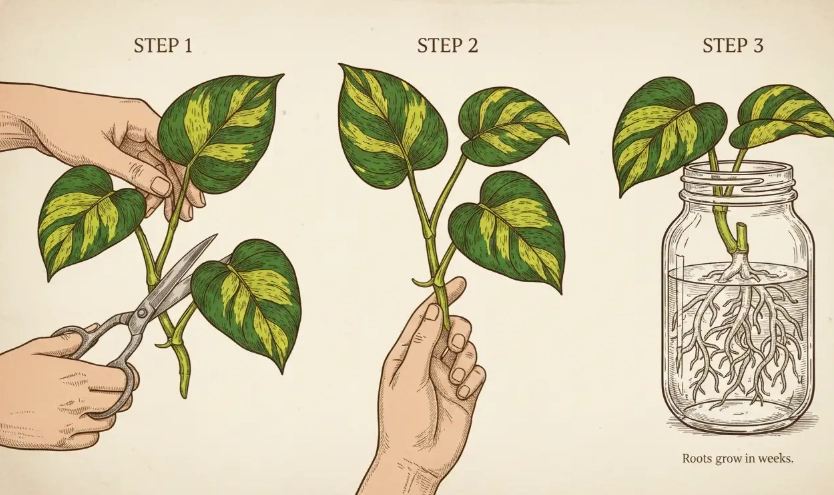
Here’s my step-by-step. First, find a healthy vine with at least two nodes (the little brown bumps where leaves and aerial roots emerge). Cut just below a node with clean, sharp scissors. Remove the bottom leaf so no foliage sits in water. Then plop the cutting into a glass of room-temperature water—filtered if your tap is heavily chlorinated. Change the water every five to seven days. Roots usually appear in two to four weeks.
I used to skip the water-change part. Big mistake. One batch turned cloudy and smelled like a pond. Now I set a phone reminder every Sunday, and my cuttings root faster.
Keep the glass in bright, indirect light. Direct sun cooks the water and promotes algae. And here’s the non-obvious part most guides miss: don’t submerge more than one node. Two nodes underwater often suffocate and rot. One node is plenty.
Method 2: Soil Propagation – Slower But Stronger Roots
If you want a plant that transitions to potting mix without shock, soil propagation is your friend. It takes longer—think four to six weeks—but the roots are sturdier.
Use a light, airy mix: two parts potting soil, one part perlite. Moisten it before you stick the cutting in. Bury one node about an inch deep. Keep the soil consistently damp but not soggy. A clear plastic bag over the pot creates a mini greenhouse and speeds things up. I place mine on a warm shelf (75–80°F) and open the bag for an hour daily to prevent mold.
My favorite soil mix for pothos cuttings: 60% coco coir, 30% perlite, 10% worm castings. It holds just enough moisture without drowning the node. I’ve rooted dozens of cuttings this way, and none have rotted.
Method 3: Sphagnum Moss – My Secret for Stubborn Cuttings
Some pothos varieties—looking at you, Jessenia—are slow to root. When water and soil fail, I reach for sphagnum moss. Soak the moss in water for ten minutes, squeeze out the excess, and layer it in a shallow container. Lay the cutting on top, node touching moss. Cover with a lid or plastic wrap to trap humidity. Keep it warm and bright. Roots show up in two to three weeks.
Why does this work? Moss holds moisture while staying airy. It’s the closest thing to a tropical rainforest floor. Just watch for green algae—it’s harmless but ugly. A quick rinse fixes it.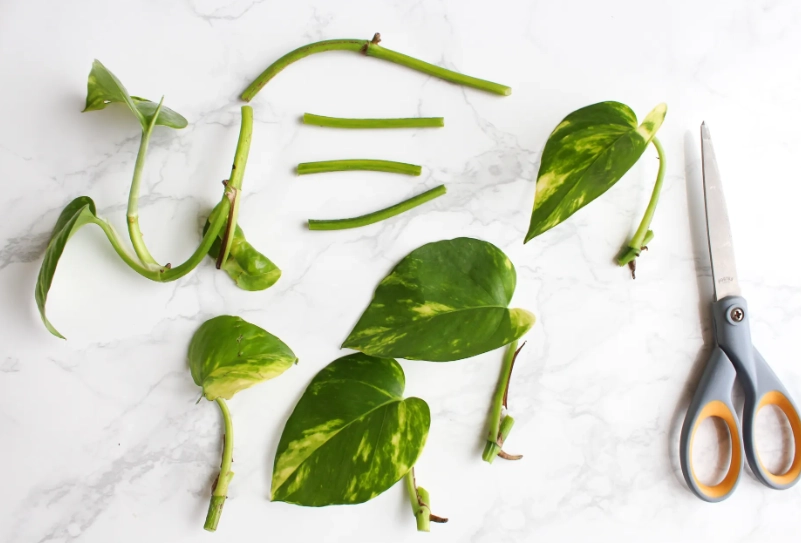
3 Mistakes That Kill Pothos Cuttings (I Learned the Hard Way)
You can follow every instruction and still fail. These are the three blunders I see most often—and yes, I’ve made all of them.
- Using tap water with high chlorine. Chlorine kills the beneficial microbes that help rooting. Fill a pitcher and let it sit overnight, or just use filtered water.
- Cutting too far from a node. The node is where roots form. If you leave an inch of leafless stem below the node, that stem just rots. Snip right below the bump.
- Changing water too often (or not enough). Once a week is the sweet spot. Daily changes stress the cutting; never changing it invites bacteria.
One more trap: rooting hormone powder is often sold with pothos guides, but it’s usually unnecessary. Pothos roots easily on its own. Save your money—and avoid the powder burn some of my friends have experienced on tender nodes.
Rooting Timeline At-a-Glance
| Method | Time to First Roots | Success Rate (my experience) |
|---|---|---|
| Water | 2–4 weeks | 90% |
| Soil | 4–6 weeks | 80% |
| Sphagnum moss | 2–3 weeks | 85% |
Your Pothos Propagation Questions Answered
This article was fact-checked against the American Society for Horticultural Science’s propagation guidelines and my own decade of growing pothos in a drafty Brooklyn apartment. No sponsored products, no fluff—just methods that worked for me.

Comments