DIY Houseplant Soil Mix: Stop Killing Your Plants
What's in this guide (skip ahead)
I killed eleven houseplants before I figured it out. The watering schedule was fine. The light was fine. The problem was the soil—specifically, the dense, peat-heavy stuff straight out of the bag. A proper DIY houseplant soil mix changed everything for me. This isn't theory. These are the exact ratios I've refined over a decade of growing aroids, succulents, and ferns in my cramped apartment with north-facing windows.
Why Bagged Soil Fails Indoor Plants (And Why DIY Fixes It)
Most potting soil sold for houseplants is designed for outdoor beds or greenhouse production. It holds water like a sponge. Indoors, with low airflow and no ground contact, that moisture sticks around. Roots suffocate. Fungus gnats move in. Root rot follows.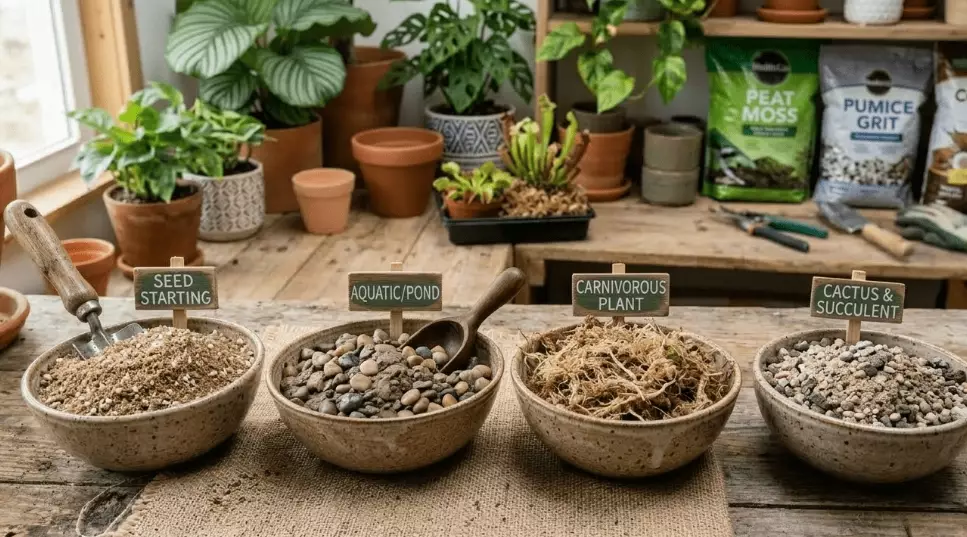
The fix isn't complicated. You need structure—chunky bits that create air pockets. You need drainage—something that lets excess water escape fast. And you need a base that holds just enough moisture without staying soggy. Bagged mixes rarely get that balance right for indoor conditions.
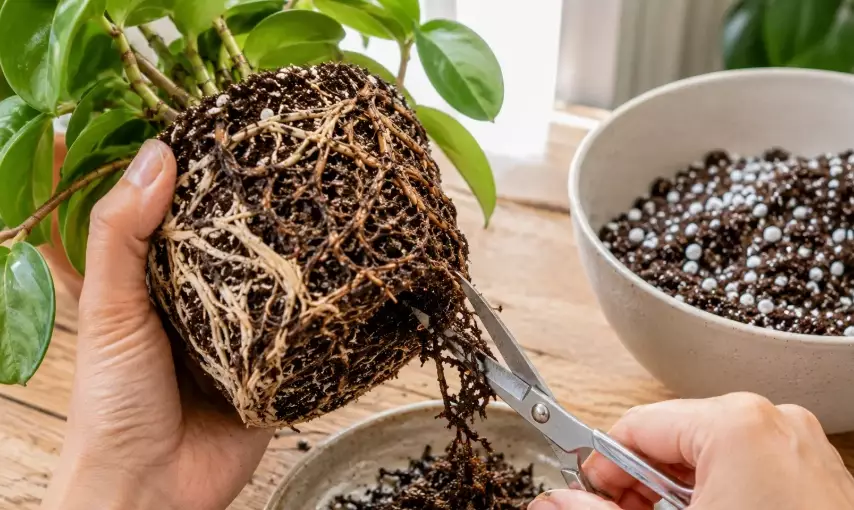
I learned this the hard way with a Monstera adansonii. It looked fine for three months, then collapsed overnight. When I pulled it out, the roots were mush. The soil was still wet from a watering five days earlier.
The 5 Core Ingredients I Actually Buy (And Where)
You don't need a lab. These five components cover almost every indoor plant I've grown. I buy them in small batches online or from local garden centers—nothing exotic.
- Coco coir — the base. Holds moisture but releases it faster than peat. Rinse it well; cheap bricks can carry salt.
- Perlite — the drainage hero. Those white puffs create air gaps. I use the coarse grade (#3) for aroids, finer for ferns.
- Orchid bark — chunky pine or fir bark. Gives structure and slowly breaks down. Medium grade works for most aroids.
- Worm castings — gentle, slow-release nutrients. A little goes a long way. Too much and the mix stays too wet.
- Pumice or horticultural charcoal — optional but helpful. Pumice adds weight and drainage; charcoal absorbs odors and filters water.
Skip the pre-fertilized mixes. You want to control nutrients separately. I add a slow-release fertilizer like Osmocote once every few months, but that's it.
My Go-To Aroid & Philodendron Recipe (The 5-3-2 Ratio)
This is the mix I use for Monstera, Philodendron, Epipremnum, and most tropical climbers. It drains fast but holds enough moisture for aerial roots.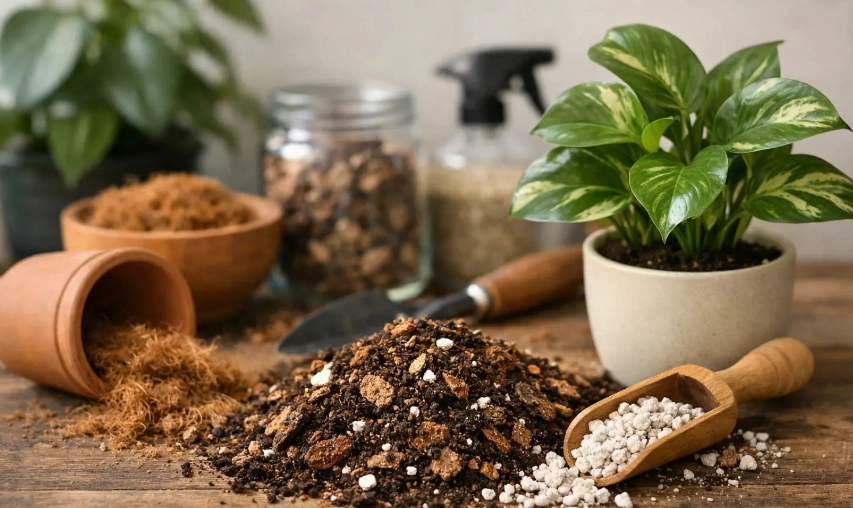
| Ingredient | Parts | Why It Works |
|---|---|---|
| Coco coir | 5 | Moisture base, not too dense |
| Orchid bark (medium) | 3 | Air pockets, structural support |
| Perlite (coarse) | 2 | Fast drainage, prevents compaction |
| Worm castings | 1/2 | Gentle nutrients, microbial life |
Mix it dry in a bucket. I use a 5-gallon bucket and measure with a cheap plastic cup—5 cups coir, 3 cups bark, 2 cups perlite, half cup castings. Stir until it looks like a chunky granola. That's it.
One detail: soak the coco coir before mixing. A dry brick expands like crazy. I learned that the messy way—coir everywhere.
Succulent & Cactus Mix That Won't Rot (Even If You Overwater)
Succulents need less organic matter. My mix is gritty and lean. This is the one I wish I'd used on my first jade plant—it might still be alive.
- Pumice — 4 parts. The backbone. Holds shape, drains instantly.
- Coarse sand — 2 parts. Not play sand. Look for horticultural or builder's sand with visible grains.
- Coco coir — 1 part. Just enough to hold a little moisture.
- Worm castings — 1/2 part. Light feeding.
No bark. No peat. This mix dries out within two days of watering. That's what you want. I top-dress with a thin layer of gravel to keep the base of the plant dry.
Fern & Calathea Mix for Moisture Lovers (But Still Airy)
Ferns and Calatheas want consistent moisture without sitting in muck. This mix holds water longer but stays fluffy.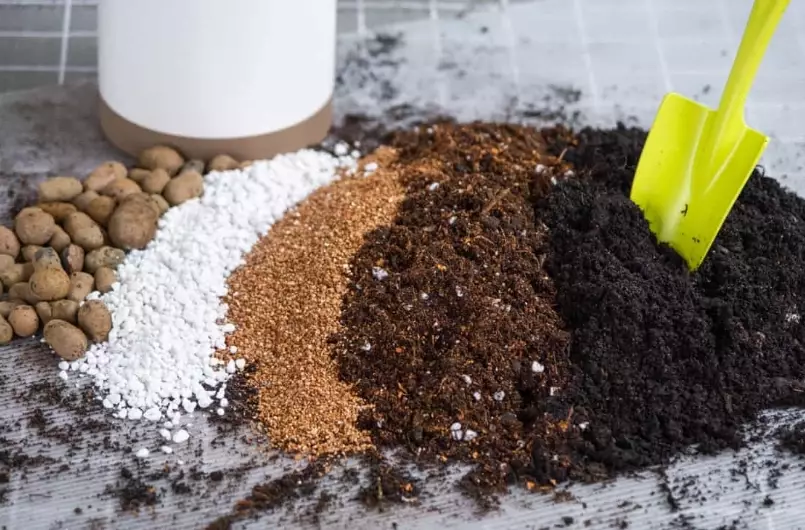
- Coco coir — 4 parts. The main moisture source.
- Perlite (fine) — 2 parts. Smaller bits keep the mix light.
- Orchid bark (fine) — 1 part. Adds texture and slow drainage.
- Worm castings — 1 part. Feeds gently.
- Charcoal — a small handful per gallon. Keeps the mix fresh.
I don't pack this mix down. I fill the pot loosely and tap the sides. Air is just as important as moisture for these plants.
Rookie Mistakes Nobody Warns You About
Here's the stuff I see even experienced growers get wrong.
Mistake #1: Using garden soil indoors. It compacts. It brings pests. It turns into concrete in a pot. Don't do it.
Mistake #2: Adding rocks to the bottom of the pot. This actually raises the water table and keeps soil soggy. Drainage holes are enough. Skip the gravel layer.
Mistake #3: Sterilizing everything. A little microbial life is good. Worm castings and bark carry beneficial fungi. Over-sterilizing makes the mix dead and lifeless. I never bake or microwave my soil.
Mistake #4: Reusing old mix without amending. Old soil breaks down and compacts. I refresh it with 30% new perlite and a handful of bark before repotting. That gives it years more life.
One more thing: fungus gnats love wet, organic mixes. My aroid mix with bark and perlite dries fast enough that gnats don't get a foothold. If you still see them, let the top inch of soil dry out between waterings.
Quick Answers to Real Questions
I've tested these recipes with over thirty indoor plants across five apartment moves. They work. Start with a small batch, adjust based on how fast your pots dry out, and don't be afraid to tweak the ratios. Soil is not a religion—it's a tool.

Comments