Yellow Leaves on Houseplants: Why They Turn & How to Fix It
I've killed more houseplants than I care to admit. The one thing that always sent me into a panic? Seeing a perfectly good green leaf turn yellow overnight. Yellow leaves on houseplants aren't just a cosmetic issue—they're a message. The plant is telling you something specific, and after a decade of trial and error (and a lot of dead ficus trees), I've learned to read that message. Let me save you some of that frustration.
What You'll Find Here
Why Do Houseplant Leaves Turn Yellow?
The short answer: a leaf turns yellow when it stops producing chlorophyll. But the reason it stops producing chlorophyll is where things get interesting. Most plant guides list five or six culprits—overwatering, underwatering, low light, nutrient deficiency, pests, and natural aging—then call it a day. That list isn't wrong, but it's shallow.
Here's what I've found in practice: the timing and pattern of yellowing narrows the cause faster than any generic checklist.
A whole lower leaf yellowing and dropping at once? Usually water-related. Yellowing that starts at the leaf edges or between veins? Nutrient or light issue. Scattered yellow speckling across multiple leaves? Pests. A yellow halo around a brown spot? Fungal problem.
One thing nobody mentioned to me early on: tap water quality can trigger yellowing in sensitive species like calathea and dracaena. The fluoride and chlorine in municipal water builds up in leaf tips and margins. I switched my calathea to filtered water and the yellow edges stopped within three weeks. That's not a nutrient problem, and no fertilizer will fix it.
Quick reality check: a single yellow leaf on an otherwise healthy plant is almost always just old age. Leaves have a lifespan. Lower leaves yellow and drop as the plant reallocates resources to new growth. Pluck it and move on.
How to Diagnose Yellowing by Leaf Pattern
I keep a mental map of yellowing patterns. It's not foolproof, but it gets you 80% of the way there before you start poking at roots or buying test kits.
| Pattern | Most Likely Cause | What to Check First |
|---|---|---|
| Lower leaves yellow evenly, feel soft or mushy | Overwatering / root rot | Soil moisture at root depth (stick a finger in 5 cm down), drainage holes, pot weight after watering |
| Lower leaves yellow evenly, feel dry and crispy | Underwatering | Soil pulling away from pot edges, bone-dry potting mix, plant light for its size |
| Yellow between veins, veins stay green | Iron or magnesium deficiency | Soil pH (too high locks out iron), fertilizer routine, water hardness |
| Yellow edges or tips on multiple leaves | Tap water chemicals, low humidity, or salt buildup | Water source, humidity level near the plant, fertilizer salt crust on soil surface |
| Scattered tiny yellow dots or stippling | Spider mites or thrips | Undersides of leaves with a flashlight, webbing at leaf joints, tiny black specks on leaf surfaces |
| Yellow halo around dark brown spots | Bacterial or fungal leaf spot | Air circulation around the plant, water sitting on leaves after misting, wet foliage overnight |
One pattern that throws people off: yellowing leaves that curl downward or feel leathery. Outdoors that might mean disease. Indoors, it often means the plant got hit by a cold draft (near a window or AC vent) or—I'm not joking—it was too close to a ripening fruit bowl. Ethylene gas from bananas and apples accelerates leaf aging. I moved a pothos off the kitchen counter away from the fruit and the yellowing stopped.
The Overwatering Trap Nobody Warns You About
Overwatering isn't about giving too much water at once. It's about frequency and drainage. I've seen people water once a week like clockwork and still drown their plants because the potting mix held moisture too long.
Here's a technique I use: lift the pot after watering. Note the weight. Then lift it again three days later. If it still feels heavy, don't water. Wait until it feels noticeably lighter. This simple weight test saved my monstera from certain root rot last winter.
Also—and I wish someone had told me this earlier—the "drainage hole" on some decorative pots is just a tiny indent stamped into the bottom, not an actual hole. I bought a beautiful ceramic pot for a fiddle leaf fig and nearly killed the plant before I realized water was pooling at the bottom with nowhere to go. Now I check every pot with a chopstick to confirm there's a real, open hole.
Fixing Yellow Leaves: What Actually Works
Stop watering on a schedule. Start watering based on soil moisture. This is the single biggest change that fixes most yellowing issues. I know it's not glamorous advice, but it's the truth.
A yellow leaf that's already fully yellow will not turn green again. No amount of fertilizer, light adjustment, or positive thinking will revive it. Your job is to support future growth, not save the already-yellow leaf. Remove it only when it's loose and comes away with a gentle tug—pulling a partially attached leaf can tear the stem.
When to Pull the Plant Out and Check Roots
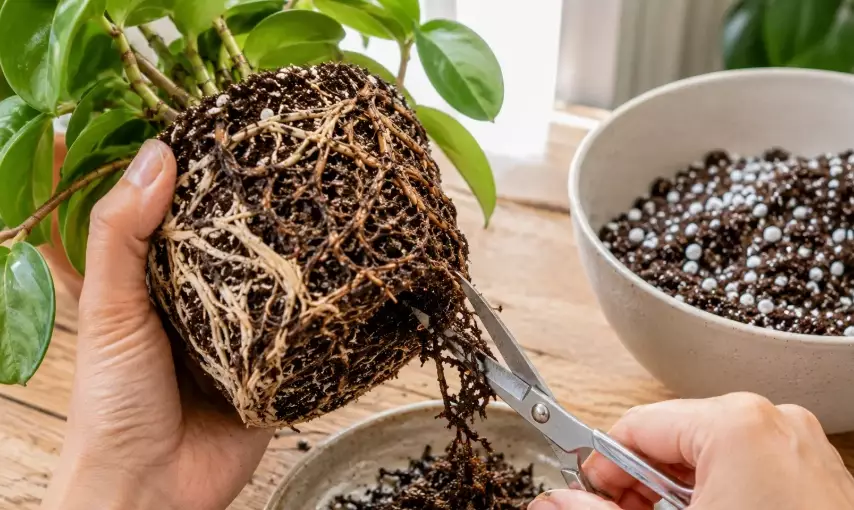
If yellowing continues after you've corrected watering and lighting, it's time to look at the roots. I do a root check when more than three leaves on the same plant have yellowed within two weeks, or when the plant looks wobbly in the pot.
Slide the plant out (gently ease it if it's stuck—squeeze the sides of a plastic pot or run a knife around the inside of a ceramic pot). Healthy roots are firm and white or light tan. Rotting roots are brown, mushy, and smell like swamp. Trim those with clean scissors, dust the cuts with cinnamon (a natural antifungal—yes, really), and repot in fresh, well-draining mix.
One non-consensus tip: after root rot treatment, don't water for a full week. I know it feels wrong. But roots need time to callus over. Watering immediately after repotting into damp soil is how you get round two of rot. Let the mix dry out slightly, then resume gentle watering.
Preventing Future Yellow Leaves
Prevention comes down to three habits I've built over the years. They're not exciting, but they work.
- Finger test before watering. Push a finger two knuckles deep into the soil. If it's damp at that depth, wait. If it's dry, water thoroughly until it runs out of the drainage hole.
- Stable light and temperature. Plants hate drafts and sudden light shifts. Keep them away from heating vents, AC units, and doors that open frequently in winter. Rotate the pot a quarter turn each week for even growth.
- Fertilize lightly in growing season only. Half-strength balanced fertilizer every four to six weeks from spring through summer. Zero fertilizer in winter for most houseplants—they're not actively growing, and unused nutrients turn into salt buildup.
One detail about fertilizer: if you're using tap water and commercial fertilizer, you might be creating salt buildup without realizing it. Flush the soil with plain water every two to three months to wash out excess salts. Just run water through the pot for 30 seconds and let it drain completely.
My go-to reference for watering and light requirements is the University of Maryland Extension's houseplant care guide. It's practical and no-nonsense, without the fluff.
When to Worry (and When to Relax)
Let's talk about the questions that keep plant parents up at night—the ones where generic answers just don't cut it.
Should I cut off a yellow leaf or leave it?
Leave it until it's fully yellow and detaches with a gentle pull, or until it naturally browns and shrivels. A partially yellow leaf is still photosynthesizing and feeding the plant. Cutting it off early robs the plant of energy. I used to snip yellow leaves immediately because I couldn't stand looking at them. Then I read that plants reabsorb nutrients from dying leaves. Now I wait. It's less pretty, but the plants are healthier.
Can yellow leaves on plants recover after I fix the watering?
Already-yellow leaves stay yellow. That chlorophyll is gone. New growth is what you're watching for. If you see fresh green leaves emerging within two to three weeks after adjusting care, the problem is solved. If yellowing continues spreading to new leaves, something else is going on and you need to reassess light, nutrients, or pests.
My plant has yellow leaves and I've checked everything. What's left?
Check the pot size. A plant in a pot that's too large (more than 2 inches wider than the root ball) sits in wet soil too long. It's counterintuitive—you think bigger pot means happier plant, but it's actually a fast track to root rot. I've seen this especially with snake plants and ZZ plants. They like being snug. Also, check for soil compaction. If the soil is rock-hard and water runs straight off the top and down the inside of the pot, the plant is technically underwatered because the water isn't reaching the roots. Aerate by poking the soil with a chopstick in a few spots.
Do yellow leaves on houseplants always mean I'm doing something wrong?
No. A single yellowing lower leaf every month or two is normal leaf turnover. Plants shed old leaves like we shed old skin cells. Panic only when yellowing accelerates (multiple leaves at once), affects new growth rather than old, or comes with other symptoms like wilting, spots, or fuzzy growth. The panic-is-normal phase lasted about six months for me when I started. Now I hardly blink at a yellow leaf.
Everything in this guide is based on my own hands-on experience with dozens of houseplants over the past ten years, cross-checked against reference material from the University of Maryland Extension and similar horticultural resources. No theoretical advice here—just what worked, what failed spectacularly, and what I wish I'd known from the start.

Comments