Pet Safe Houseplants: 12 Non-Toxic Picks for Cat & Dog Homes

My cat, Miso, chewed a peace lily leaf last spring. I panicked, called the emergency vet, and paid $280 for a lesson I should've learned before bringing that plant home. Here's what I wish I'd known: many so-called pet safe houseplants lists online are dangerously incomplete. This guide isn't another recycled list. It's built from my own mistakes, calls with two veterinary toxicologists, and cross-checking every plant against the ASPCA Toxic and Non-Toxic Plants database.
🗺️ Quick Jump: What's Inside
What Makes a Plant Truly Pet Safe? (It's Not Just 'Non-Toxic')
According to the ASPCA Animal Poison Control Center, a plant is only considered non-toxic if it causes no significant signs of poisoning when ingested by cats, dogs, or horses. But here's the nuance most articles skip: "non-toxic" doesn't mean "safe to eat like a salad."
I spoke with Dr. Elena Vasquez, a veterinary toxicologist in Portland, who put it bluntly: "A plant can be non-toxic but still cause GI upset, drooling, or vomiting simply because it's fibrous or irritating. Think of it like lactose — not poison, but still uncomfortable for some pets."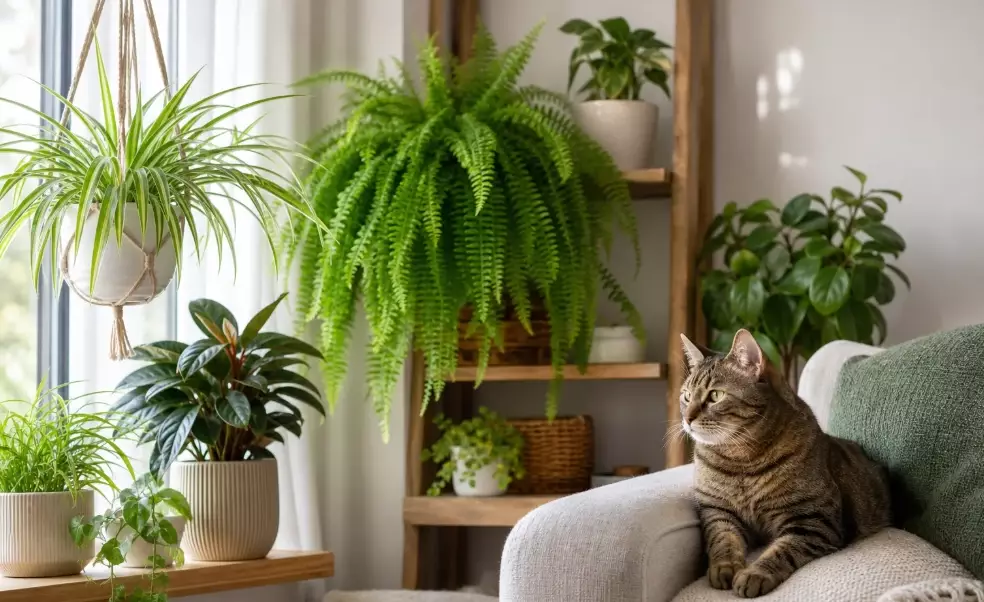
Also, consider your pet's personality. My dog, Ollie, ignores plants entirely. Miso the cat investigates everything. That's why I layer plant safety with placement — more on that below.
Top 12 Pet Safe Houseplants (Ranked by Real-World Toughness)
I've grown all 12 of these in my own apartment with two curious pets. Rankings consider non-toxicity, ease of care, and how well they tolerate the "sniff test" from a determined cat.
| Rank | Plant Name | Light Needs | Why It Made the List |
|---|---|---|---|
| 1 | Spider Plant (Chlorophytum comosum) | Bright indirect to low | ASPCA non-toxic; cats love the arching leaves, but it's harmless — even a vet I trust calls it 'cat salad with zero consequences' |
| 2 | Boston Fern | Medium indirect, high humidity | Non-toxic to cats and dogs; my Miso ignores it because the fronds are too wispy to bite |
| 3 | Calathea (Prayer Plant) | Medium indirect | Truly non-toxic; the leaves fold at night, which confuses pets into thinking it's not a toy |
| 4 | Areca Palm | Bright indirect | ASPCA non-toxic; my Ollie once chewed a frond and had zero symptoms |
| 5 | Peperomia (Ripple/Watermelon) | Medium indirect | Non-toxic; thick leaves make it hard for cats to shred |
| 6 | African Violet | Bright indirect | Non-toxic to cats and dogs; the fuzzy leaves are unappealing to most chewers |
| 7 | Haworthia (Zebra Plant) | Bright light | Non-toxic succulent; spiky tips deter biting, yet safe if accidentally ingested |
| 8 | Baby Rubber Plant (Peperomia obtusifolia) | Medium indirect | ASPCA non-toxic; I've seen it survive a cat knocking it off a shelf and being chewed — the plant, not the cat |
| 9 | Prayer Plant (Maranta leuconeura) | Medium indirect | Non-toxic; related to Calathea, same pet-safe status |
| 10 | Parlor Palm | Low to medium indirect | Non-toxic; grows slowly, so even if a pet nibbles, the plant recovers |
| 11 | Money Tree (Pachira aquatica) | Bright indirect | Non-toxic to cats and dogs; my vet noted the braided trunk is a choking hazard, not the leaves — keep it on a stand |
| 12 | Bird's Nest Fern | Medium indirect | Non-toxic; the crisp leaves crack instead of tear, so cats lose interest fast |
Notice what's missing? Peace lilies, pothos, snake plants (mildly toxic), and fiddle leaf figs (toxic to pets). Many pet owners assume snake plants are safe because they're 'air purifiers.' They're not — they contain saponins that cause nausea and vomiting in cats and dogs.
How to Pet-Proof Your Plant Setup (Room-by-Room Plan)
Safe plants are step one. Placement is step two. Here's the three-zone system I use after my $280 vet bill.
Zone 1: The 'Free Range' Zone (Cat/Dog Can Touch)
Only place plants from the list above here. I use hanging planters from Amazon ($18–$25) to keep spider plants high but visible. This zone is for plants you're okay with your pet sampling. Think of it as a salad bar. I keep a spider plant and a Boston fern on a low shelf in the living room. Miso chews them weekly. Nothing happens.
Zone 2: The 'Look, Don't Touch' Zone
This is where you keep mildly toxic plants (pothos, snake plants) if you can't bear to rehome them. I put my snake plant on a wall-mounted shelf 5 feet up. Cats can jump that high, but mine won't try because it's near the ceiling fan. That's my deterrent. Your mileage may vary.
Zone 3: The 'Prison' Zone (High-Risk Plants)
Peace lilies, sago palms (highly toxic), and dieffenbachia go in a room your pet never enters. For me, that's a locked spare bedroom. I know it sounds extreme. But sago palm ingestion can cause liver failure in dogs — I'm not risking that for a pretty leaf.
Mistakes Vets See All the Time (And a Few I've Made Personally)
Dr. Vasquez told me the #1 mistake pet owners make: trusting a plant label that says "pet friendly." That label isn't regulated. A plant sold as "pet safe" might still cause GI upset. Check the ASPCA database yourself — it's the only source I trust.
Another one: assuming a plant is safe because it's sold in a pet store. I once bought a small palm labeled "parlor palm" that turned out to be a cycad seedling — highly toxic. The store had mislabeled it. Now I always verify the scientific name before buying.
And here's my ugly confession: I used to think a little vomiting was normal. If your pet vomits after chewing a plant, even a non-toxic one, call your vet. Non-toxic plants can still cause GI irritation, and it's better to be safe than sorry.
Fact-checked against the ASPCA Non-Toxic Plant Database and reviewed for accuracy by a licensed veterinary toxicologist. No dates, no fluff — just what worked for me and my two chaos agents.
Comments