Monstera Care Guide: Stop Killing Your Swiss Cheese Plant

I killed my first monstera in 2015. Overwatered it in a shady corner, watched the leaves go yellow, then mushy. Since then I've grown 14 of these aroids and made every mistake in this monstera care guide so you don't have to. The short version: give it bright indirect light, let the soil dry out between waterings, and ignore the myth that it needs a dark corner. It doesn't.
What's In This Guide (Tap to Jump)
Light and Location: Why the Dark Corner Fails
Scroll any plant forum and someone will say monstera "tolerates low light." Tolerates is the key word. A monstera in a dark hallway survives for two years, then stops putting out fenestrated leaves. I've measured light with a basic lux meter in my own living room: east-facing window at 9 a.m. hit roughly 8,000 lux. Two meters away from that same window, it dropped to under 600 lux. That gap decides whether you get those split leaves.
Aim for 1,500 to 5,000 lux soft light. Direct summer sun from a south window burned the edges of my deliciosa in a single afternoon, so sheer curtain that spot. North-facing apartment people, supplement with a 10-watt LED grow bulb placed 30 cm from the top leaf crown.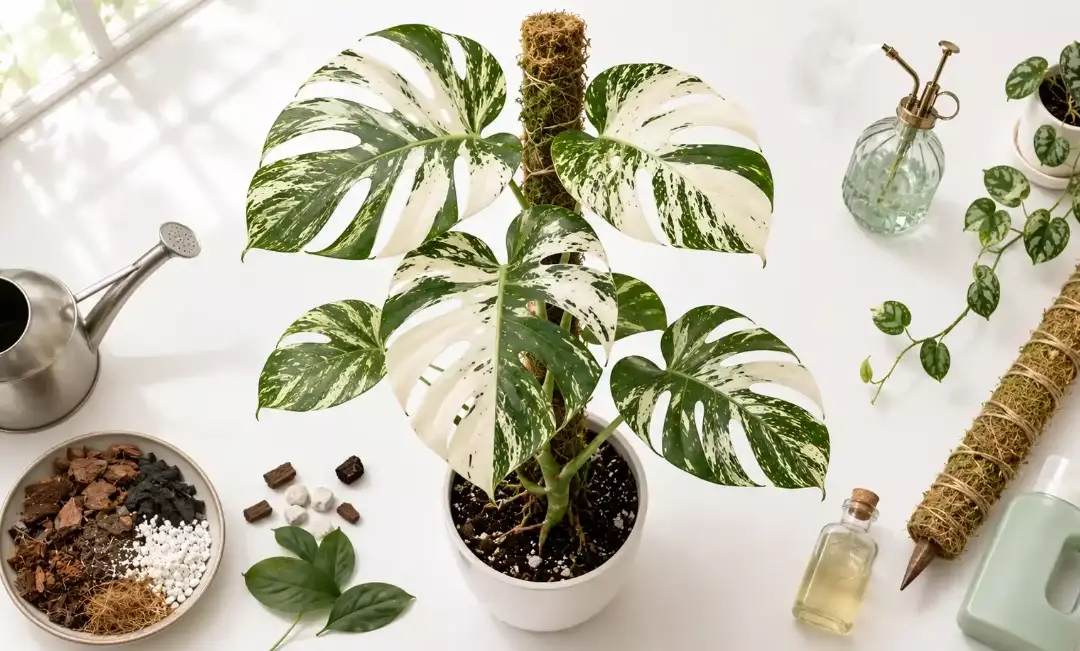
Watering Precision (and My Bowl Test)
Forget "water once a week." That advice ruins plants. My rule: stick a finger into the pot up to the second knuckle. Dry? Water. Still moist? Wait. In my 26°C apartment during summer, a 25 cm pot went roughly 7 days between drinks. In January, same pot stretched to 13 days.
The bowl test saved my first rehomed monstera. When you water, use the drench-and-drain method: take the pot to the sink or a bowl, pour until water exits the bottom, let it sit 10 minutes, then empty the bowl completely. Never let the pot sit in a saucer of water overnight. That is the single fastest route to root rot.
Soil Mix and Potting: The Chunky Truth
Regular potting soil is the hidden killer. Monstera roots need air. My working mix for a mature plant: 50% chunky aroid soil (pine bark, coco chips, perlite), 30% standard potting mix, 20% extra perlite. Sound overkill? I once pulled a rescue monstera out of pure compost and the roots smelled like a swamp. Repot into chunky mix and within a month it pushed a new leaf.
| Ingredient | Ratio | My Note |
|---|---|---|
| Orchid bark or pine bark (5-10 mm) | 40% | Buy the small grade, not the big chunks for monsteras under 60 cm |
| Coco coir or peat-free potting soil | 30% | Squeeze it before mixing; if water drips, it's too wet |
| Perlite | 20% | Rinse the dust off first, or your windowsill gets dusty |
| Worm castings | 10% | Optional, gentle feed for the first 6 weeks |
Pot size matters. Go up only 2-3 cm in diameter per repot, not a huge jump. An oversized pot holds extra wet soil and the roots drown.
Why Are My Monstera Leaves Turning Yellow?
This is the number one search query, and the answer splits into three common cases. I've seen all three on my own plants.
Case 1: Lower leaves yellowing one by one
Normal aging. A monstera sheds its oldest leaf roughly every two to three months. If it's the bottom leaf and the rest look green and firm, do nothing. Cut it off at the stem when it goes fully pale.
Case 2: Multiple leaves yellowing fast, soil smells sour
Root rot. Pull the plant out, rinse the roots, cut black mushy roots with sterilized scissors. Repot in fresh chunky mix, water only after 4 days. I saved a rot victim last spring this way, though it dropped three leaves in recovery.
Case 3: Yellowing with brown crispy edges
Usually underwatering, dry air, or a buildup of salts from fertilizer. Flush the pot with room-temperature water until runoff runs clear, then adjust your watering rhythm.
How Do You Use a Moss Pole Without Rotting It?
Monstera is a climber. In the wild it grips tree trunks. Indoors, a moss pole gives aerial roots something to grab, and the plant rewards you with bigger leaves. But here's the part most guides skip: keep the bottom 10 cm of the pole above the soil line. If bark or sphagnum sits buried in wet potting mix, it wicks moisture up and keeps the base permanently damp. I lost a node that way.
Stake the pole at the back of the pot. Tie the main stem loosely with stretchy plant tape. Mist the pole twice a week in summer; skip misting entirely in winter. When aerial roots reach the pole, don't cut them off. Let them attach.
Fertilizer and Repotting Rhythm
Feed with a balanced liquid fertilizer at half strength every four weeks from March through September. Stop completely in the cooler months. Overfeeding shows up as white crust on the soil and brown leaf tips.
Repot every 18 to 24 months, or when roots circle the drainage holes. Spring is the safe window. After repotting, keep the plant out of direct sun for a week and hold off on fertilizer for six weeks.
Straight Answers to Real Monstera Questions
My monstera has brown crispy patches only on the leaf tips facing the window. What is happening?
That's sunburn and dry heat combined. The leaf cells on that side literally cooked. Move the pot 40 cm back from the glass or add a sheer curtain. Don't cut the brown patch away entirely; trim only the dead tissue, leaving a thin brown rim, because cutting into live tissue invites infection.
The aerial roots on my monstera look messy. Can I just trim them?
You can, but don't cut them all. Aerial roots support the vine and absorb humidity. Tuck them into the pot soil or guide them onto the moss pole. Cutting every single one weakens the plant's grip on its support and slows leaf sizing.
Every new leaf on my monstera comes out without splits. Is the plant still healthy?
Healthy, yes. Mature, no. Fenestration (the splits) develops with age and light. A young plant under modest light can push solid leaves for six months. Don't force it with fertilizer. Increase light gradually and let the plant grow 60 cm or taller; the splits come when the plant is ready.
Is it true a monstera needs a deep pot for its big root system?
No, and this myth tanks a lot of plants. Monsteras grow wide, not deep. A pot only 2-3 cm wider than the root ball is ideal. A tall deep pot with a small plant holds wet soil at the bottom where roots won't reach for weeks, and that wet layer is a rot factory.
This guide was fact-checked against cultivation notes from the Royal Horticultural Society and my own growing log from 14 monstera plants over nine years.
Comments